


This is an evolving list of poetry books that demand a seat at the table, with words that makes you pause between sips, underline a line, or stare out the window. Poetry books come in many forms: micro-booklets (~5–15 pages), chapbooks (~18–40 pages), and full-length collections (48+ pages). The titles featured on this list are indie/small* pressed, and absolutely potent. The perfect literary companions to your morning cup of coffee, or afternoon tea.

2026
May’s Pick
A Little Feral by Maria Giesbrecht
Write Bloody Publishing (2026)
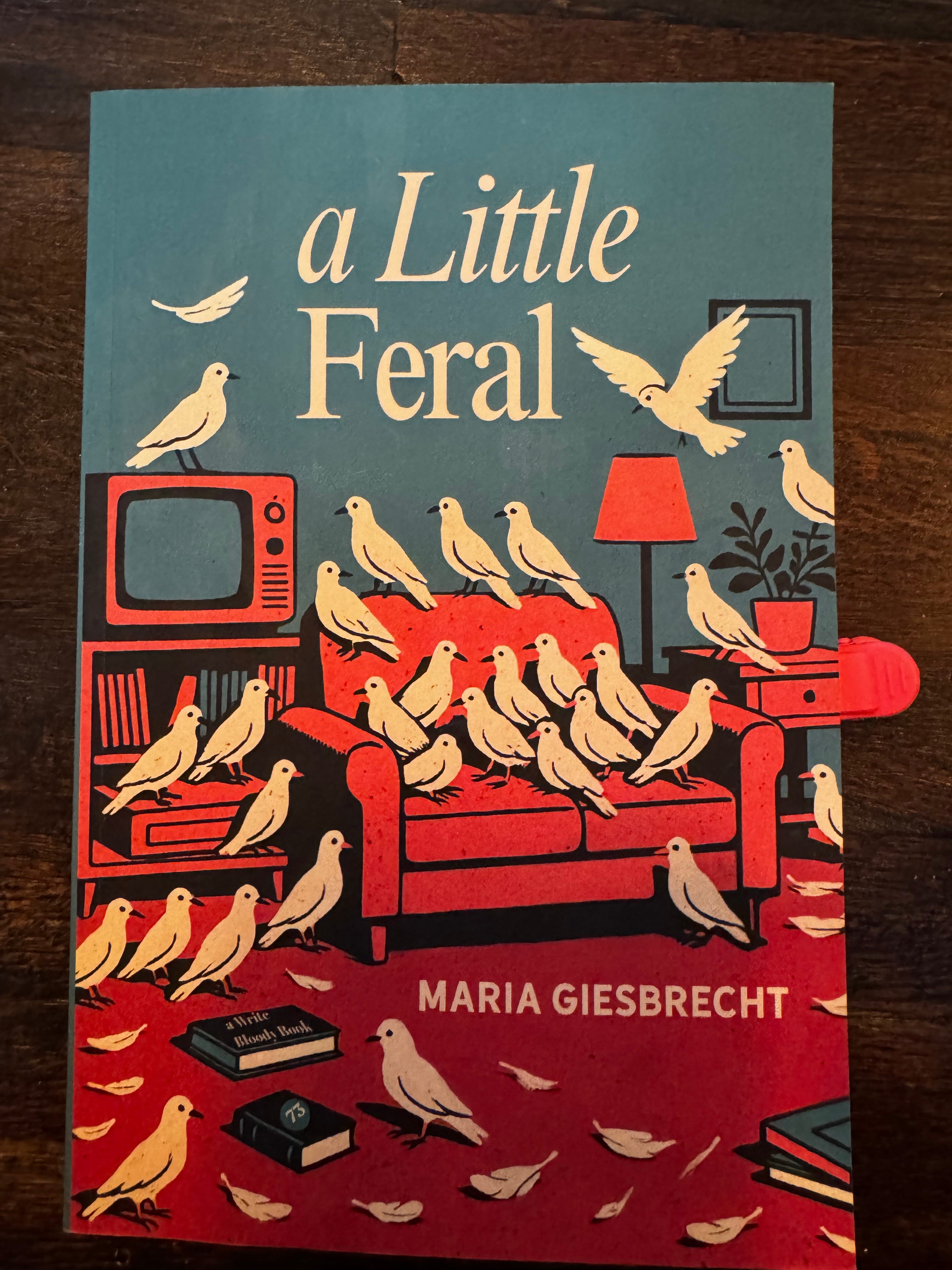
Bonus thrill, my bookmark matches the cover.
Maria’s use of language is truly striking. Writers can learn from the way she defamiliarizes language without letting the technique feel decorative or detached from the plot. It never reads like a cheap literary device; instead, the strangeness feels earned, and purposeful.
Her style is one of my favorites, and flows in the same vein as Isabelle Correa, while still remaining entirely distinct and unmistakably her own. This book will delight readers: it is accessible enough for those newer to poetry, yet layered and complex enough to reward close reading.
From one of my favorite poems in the book, “I think I pulled a little God from my mouth,” she writes: “her jaw had simply hinged / open like a red tulip / on autopilot in April.”
I also especially appreciated the section epigraphs throughout the book. Those brief quoted openings gave each section a sense of invitation and atmosphere, almost like small doors into the work that followed.
There is also plenty of spicy moments in the book, which I normally do not care for, but Maria’s ability to relay intimacy without it feeling cheap or commercial is just another one of her many gifts.
☕ Pairs well with: A spice chai latte, as an afternoon pick-me-up.
🔗 PUBLISHER Purchase Link
April Pick
The Size of Your Joy by Elise Powers
Central Avenue Poetry (2026)
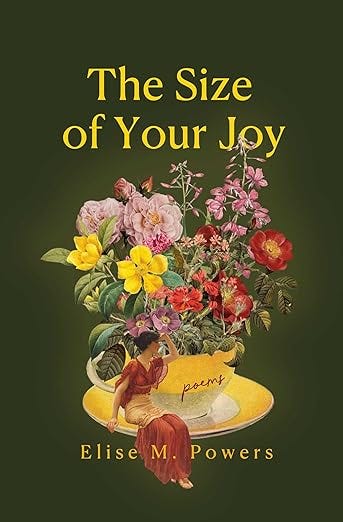
Elise Powers’ The Size of Your Joy is a study in scale: how something so fleeting, so fragile, can still take up space, can still be held. There’s an obvious intelligence at work here, a sense that joy is still present in the midst of pain. These feminine powered poems move with emotional precision and restraint, never forcing feeling, but allowing it to rise naturally through image and line. Powers has a gift for returning the ordinary until it reveals something deeper beneath the surface. What lingers most is the attention to language. It’s clean, intentional, and exact verse. The Size of Your Joy is a collection that asks you to slow down and consider what should be plucked from the experience, what should be kept safe in your pocket for the rest of the journey.
☕ Pairs well with: A soft morning light and a cup of honeyed Oolong tea.
March Pick
In Praise of Late Wonder by Lee Herrick
Gunpowder Press (2024)
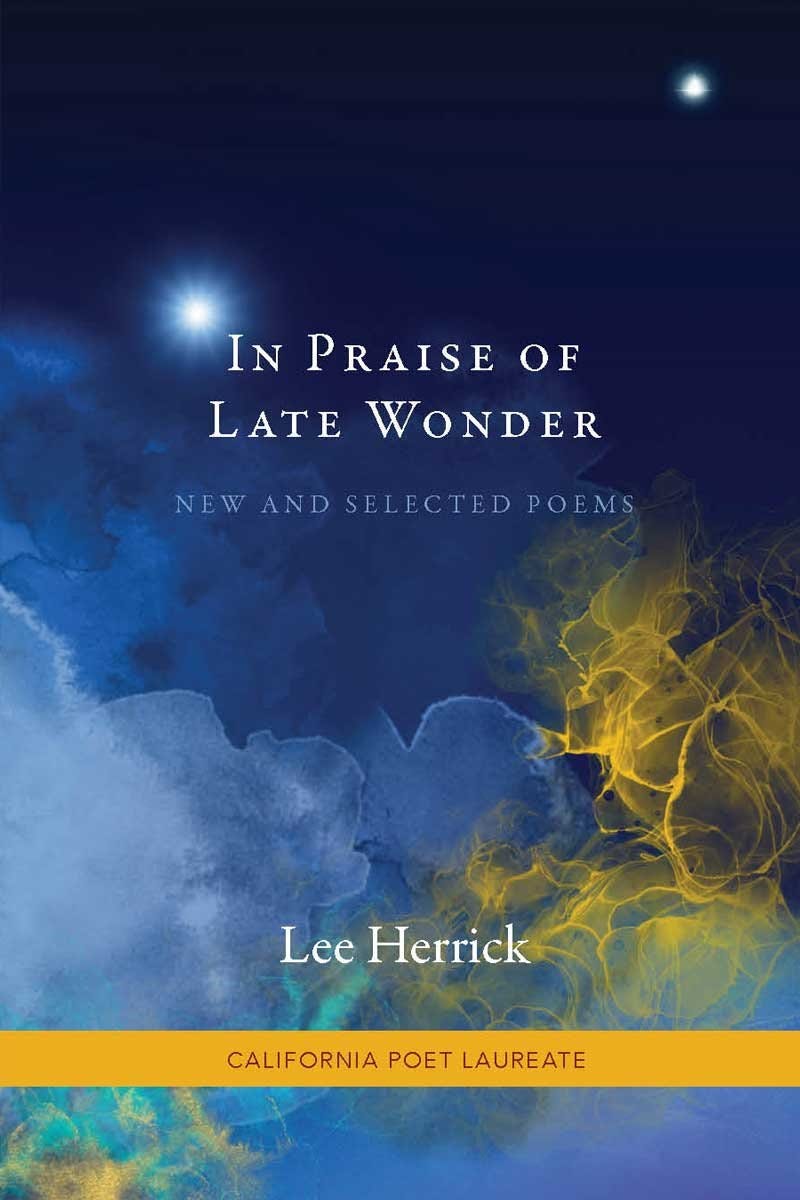
Herrick’s poems are rooted in a deep attentiveness to the world—to people, to place, to the noisy exchanges that shape a life. There’s a steadiness here, a generosity of spirit that feels earned rather than performed. These are poems that understand the complication of belonging, and old relationships are presented as something that can still open, even now, into wonder.
What makes this collection resonate is its keen use of sound combined with clarity and warmth. Herrick writes in a language that is accessible without ever being simple. There’s a humility in the work, a sense that the speaker is learning alongside the reader, discovering meaning in real time.
☕ Pairs well with: A brew from a percolator, or a whistling kettle, something that draws you near to a specific place in time with sound.
🔗 Purchase from Gunpowder Press
February Pick
Quietly Wild by Alix Klingenberg
Published Mandala Press (2025)
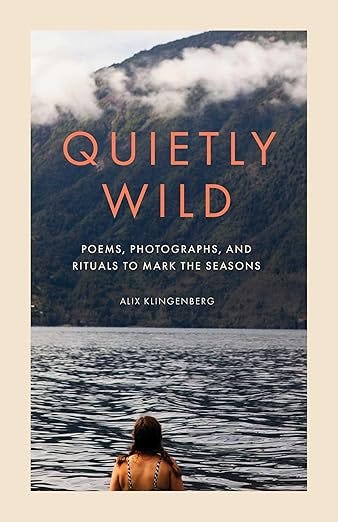
Alix Klingenberg’s Quietly Wild moves with restraint, with attention, with a kind of emotional intelligence that doesn’t need to raise its voice to be heard. There’s a tension here between control and surrender, between the cultivated self and the one that wants to slip the fence. Klingenberg writes into that space with precision—each poem feeling considered, but never overworked. What stands out most is the clarity of language paired with emotional undercurrent. These poems trust the reader. There’s also a devotion to the natural world woven throughout, the images that feel lived-in rather than decorative, all captured by the author, and her other impressive talent: Photography. Quietly Wild encourages the ritual of daily poetry as it simultaneously delights in its own innate beauty of literature and art. I’m enjoying the slow read and companionship.
☕ Pairs well with: A simple black tea at dusk. Something steady, grounding, and warm enough to hold in your hands while you sit with it.
January Pick
Paper Crown by Heather Christle
Published Wesleyan University Press (2025)
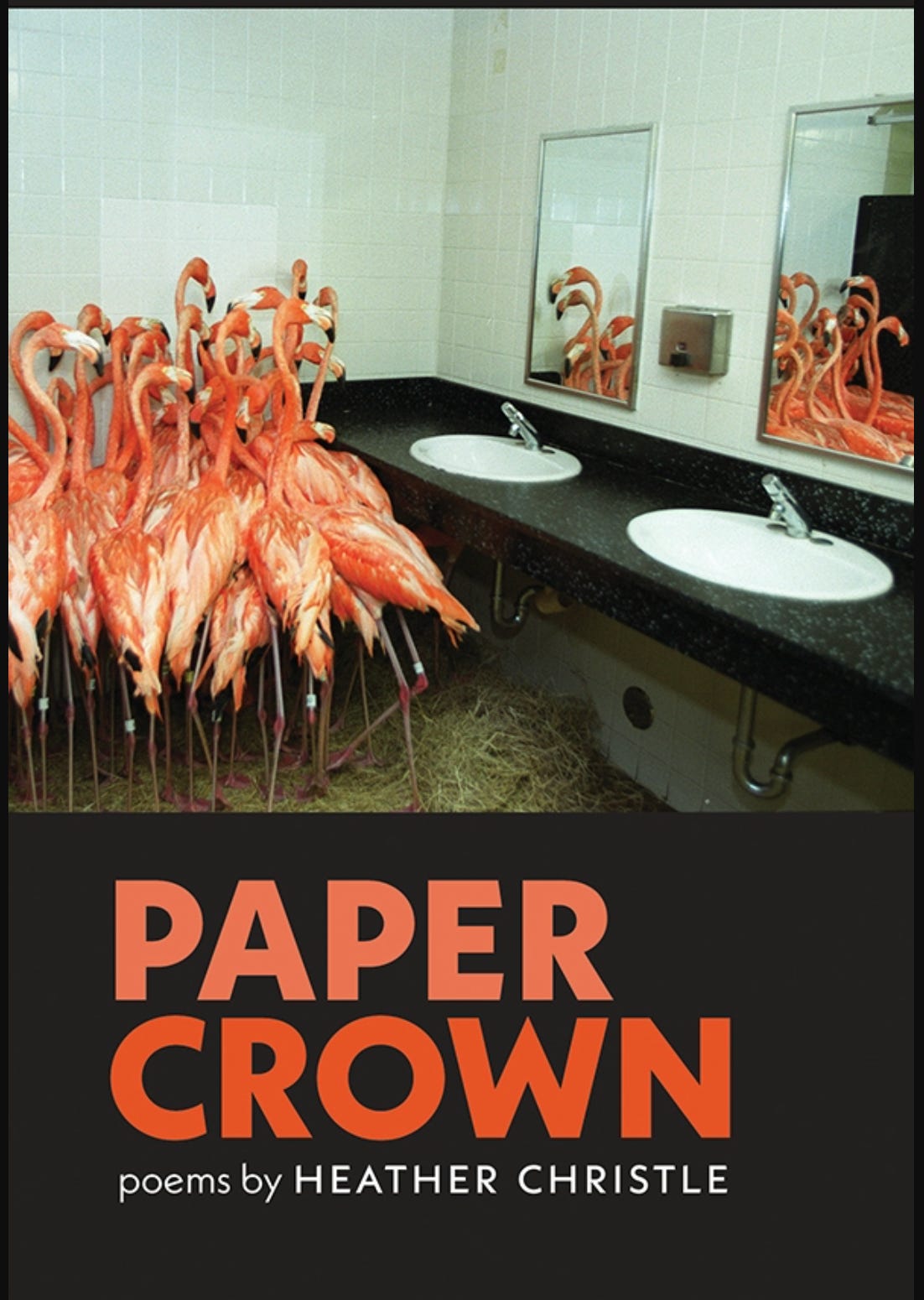
I had the chance to hear Heather Christle read at the DeKalb Book Festival, and it made an already beautiful collection feel even more intimate. There’s something rare about encountering a poet whose presence matches the tenderness on the page: compassionate, sweet, and a bit quirky. Hearing the work aloud underscored what the book does so well—just an honest mind and open heart moving through the world, noticing.
This collection is built on ruminations. And Christle doesn’t rush toward conclusions; she lingers and lets the art of the process stay visible on the page. That openness is part of the power. The poems feel alive in the moment they’re being made, as if you’re witnessing thought turn into image. And what images! The language feels fresh and surprising without being showy. There’s a clarity to the lines, but also a shimmer: the sense that what you’re reading is both exactly what it says and more than it can say at once. The book keeps offering scenes and sensations that land with a clean, bright force.
The day cracks itself / on my forehead, like / an egg. I feel / the cold of it running / down my cheeks, excerpt from “Swallow it Whole” (Paper Crown, by Heather Christle)
That’s what makes Paper Crown such a lovely read: it’s intelligent without becoming distant. It trusts the reader to stay present. It trusts the image to do its work. And it trusts the smallest observations—those fleeting interior flashes we usually let pass—to tell a story.
This is the kind of collection that reminds you why small presses are essential. They take chances on books that don’t fit neat commercial expectations—books that are stranger, sharper, more idiosyncratic, more human. A crown made of paper—and yet somehow sturdy enough to wear for days.
🔗 Purchase from Wesley University Press
2025
NOVEMBER PICK
Upon Learning That, Curated & Edited by Alex Dawson
Published KDP (September 2025)
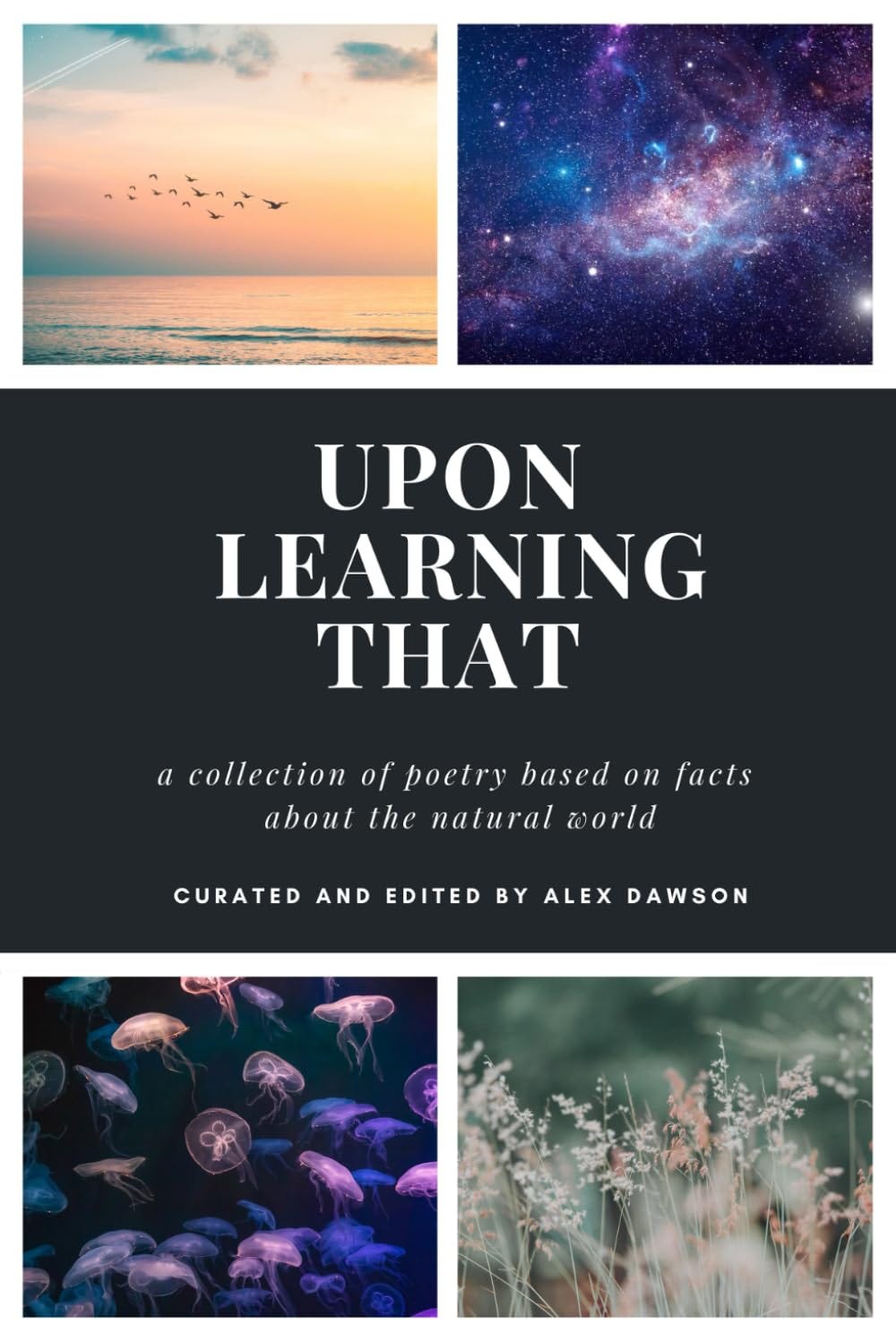
Upon learning that, Upon Learning That existed, I was already halfway in love with it. I’m familiar with the curator of this anthology, so it’s no surprise that every poem here is of such high caliber. What did surprise me is how seamlessly these pieces come together to create a truly beautiful, almost gleefully curious reading experience.
The premise is genius: each poem orbits around a specific fact, but what emerges is so much more than trivia. I’ve never read a poetry book where I was this excited just to move from title to title, feeling that little spark of anticipation—what could possibly come next?
The facts themselves are fascinating, but the real magic is how the poets expand them, twist them, and illuminate the emotional, philosophical, and tender spaces around them.
If you love unique facts that seem to hold more wonder than the facts themselves, you’ll love Upon Learning That. It’s the kind of book that makes you feel both smarter and also more connected to the world around you by the last page, and it’s one I’ll be pressing into the hands of poetry people AND “I don’t really read poetry” people alike.
AUGUST’S PICK
A Reading, by Shelley Lloyd
Published Bottlecap Press (August, 2025)
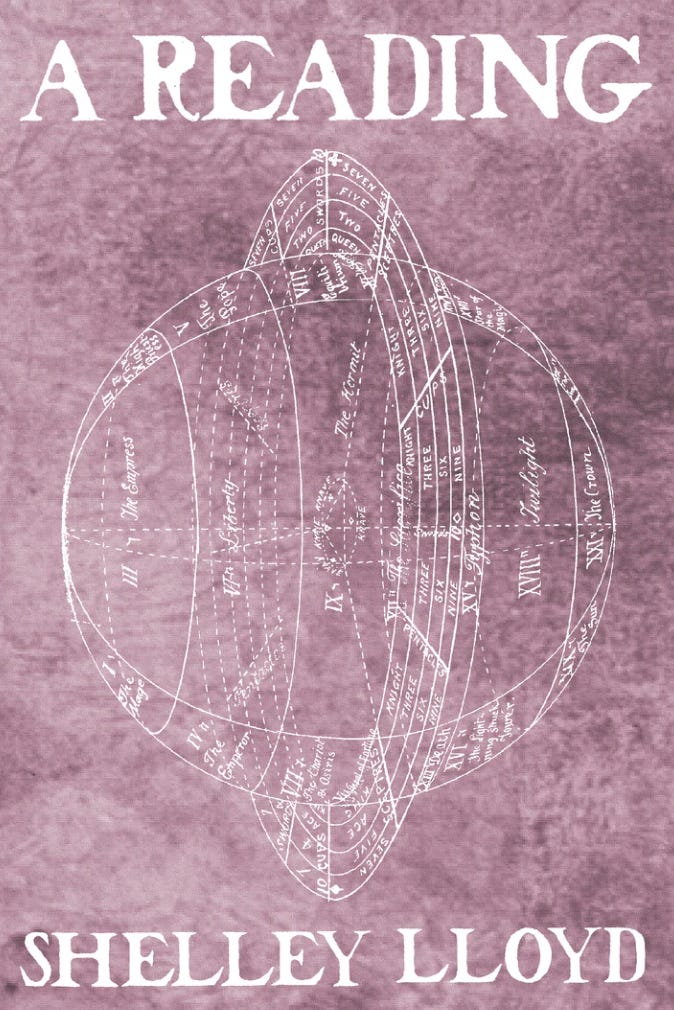
Shelley Lloyd’s A Reading is a deft example of the hybrid prose-poem/creative-nonfiction chapbook: compressed at the sentence level, capacious in scope. Across thirty-two pages, the book braids scenes, with a touch of aphorism, into a voice-driven meditation on time, displacement, disability, and the strange glitching elasticity of ordinary life.
Lloyd takes us by the belt loops and shows us what it’s like to be them for a while. The effect is hospitable and instructive: sometimes the prose slips into mini-tutorials, teaching us their hobbies and rhythms, the small rituals that keep a life stitched together when larger structures wobble. That pedagogical undertone doubles as ethos; we trust the speaker because they show their working out of situaitions—how attention is paid, how meaning is made, how a body moves through rooms, concerts, and calendars.
If hybrid work sometimes risks feeling formless, A Reading claps back with shape: a chapbook length that invites one-sitting immersion, with a cadence that rewards re-reading.
Lloyd’s scholarly background is evident; the sentences know what they’re doing; the arguments arrive sideways, through image and arrangement. The result is this resilient poetics of coping: writing and neurodivergence are framed as methods of survival and resistance, while remaining flexible enough to bear the weight of unstable days ahead.
🔗 Purchase from Bottlecap Press
Buying direct supports the author and helps keep small press poetry thriving.
JULY’S PICK
Where the Beetle Went for Lunch, by Sonja Ringo
Published (June 8, 2021)
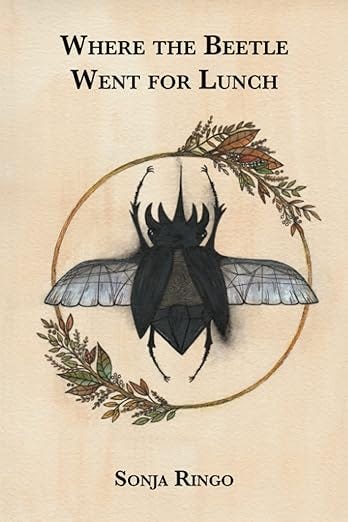
Reading this collection felt like finding kinship in the wild—like stumbling upon someone who not only notices the small, sacred things, but holds them with reverence. Sonja Ringo’s Where the Beetle Went for Lunch soothed something deep in me. There’s a gentleness to her language, but a fierce, rooted love underneath.
Two poems that especially stayed with me were: “Howler Monkey” and “Earth Song”
The book is divided into five elemental sections: Earth, Air, Fire, Water, and Spirit, and within each, the poems observe nature yes, but they also listen to it. There’s a quiet reverence throughout, a sense that every beetle, breeze, and birdsong is part of a shared and bigger conversation.
Pairs well with: A warm cup of rooibos or chamomile. At 128 pages, Where the Beetle Went for Lunch is a grounding, elemental read—perfect for evenings when you're craving something quiet, wise, and close to the body.
Purchase Link:
🔗 Purchase from Sonja Ringo’s Website Free Shipping.
Buying direct supports the author and helps keep small press poetry thriving.
JUNE’S PICK
The Carrying by Ada Limón
Published by Milkweed Editions (4/13/21)

In The Carrying, Limón writes of illness, dementia, dislocation, fertility challenges and longing with startling clarity; all the while honoring nature, animals and family. Limón’s artistry lies in her lyricism, the ability to frame the private as communal, and her searing metaphors—a poetic sleight of hand that feels like truth blooming in slow motion.
This collection is a meditation on the tension between belonging and being unmoored. Limón also shows us how we are part of nature, and yet so often cruelly apart from it. We are all trees, she suggests, shifting slightly in variation from state to state. Her poems remind us what it means to carry things we didn’t ask for, and still find the grace to grow. One line in particular stays with me: “Imagine you must survive without running,” she’s referring to trees, in the poem Ancestors.
They say to write the book only you could have written, and I believe that’s generally good advice. But reading Ada Limón’s The Carrying makes me want to leave space for a caveat. Because this book feels like it could have been written by me, too—not in voice or virtuosity—but in how it echoes my lived experience. It stirred me to tears more than once. I felt a camaraderie with the poet and her work, and I will now forever hold this book in a special place.
Purchase Link:
https://milkweed.org/book/the-carrying
MAY’S PICK
Good Girl and Other Yearnings – Isabelle Correa
Published by Write Bloody Publishing (April 18, 2025)
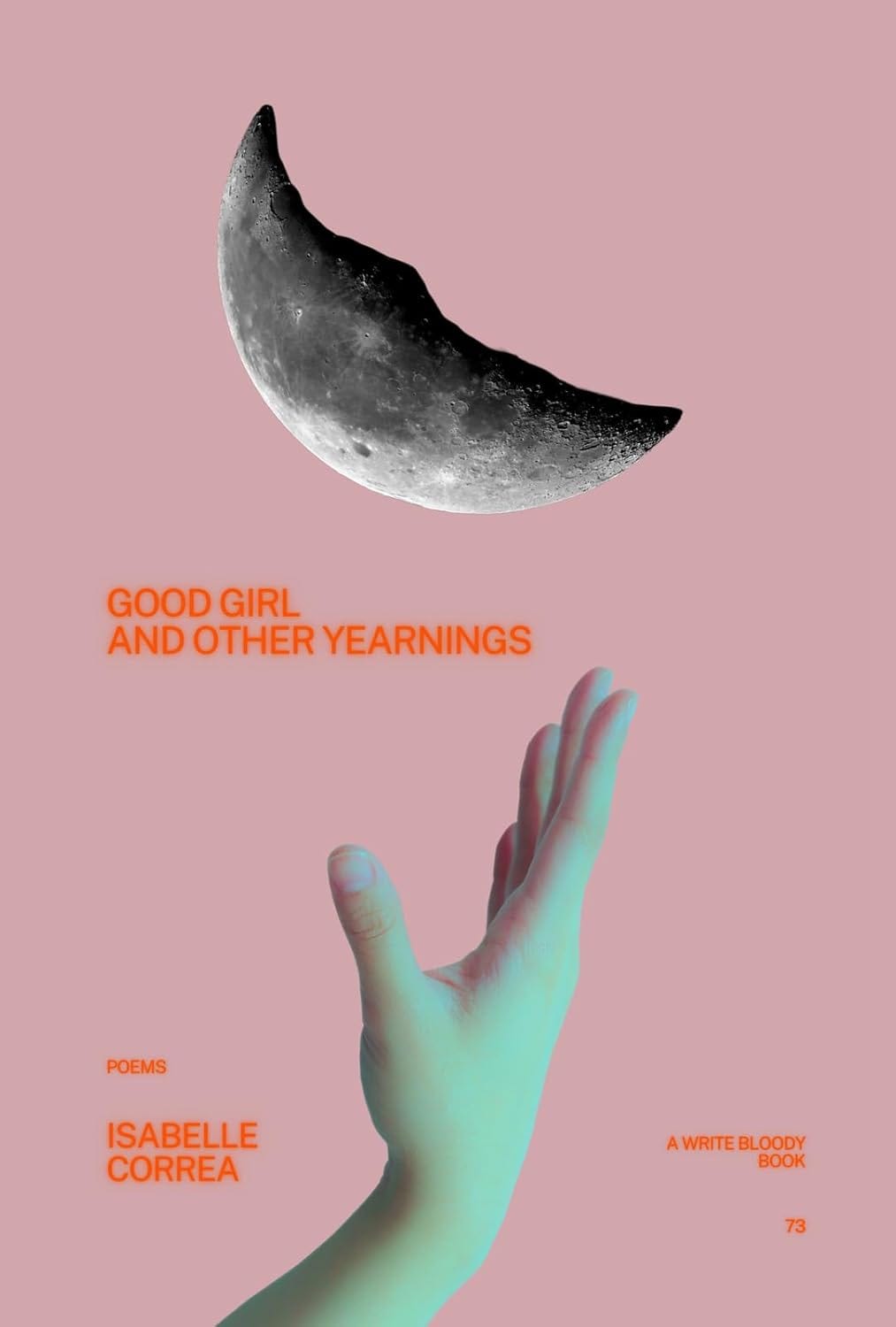
“To travel back in time and tell their younger selves the real difference between lust and love is that love is a seed and lust is a bird ravenous for seeds.” —Girls Only Want One Thing.
This debut is a poetic excavation of identity, trauma, and tenderness, where the body becomes archive of both inquiry and answer. These poems span girlhood, grief, memory, desire, and reclamation, blending the surreal and the confessional with a voice that’s both vulnerable and razor-sharp. Correa bends narrative, myth, and the language of healing into something wholly her own.
“I know a tree is a wound
of the earth. I know a wound is an act
of remembrance.”“A poem is a place / I go. It's safe / like an ambulance / is safe. / You being / inside / means / you're already hurt."
This is poetry that knows how to carry pain without glorifying it, and how to name hope without erasing struggle that came before. Correa writes like someone who’s survived and speaks with ownership.
Pairs well with: A lavender oat milk latte—comforting, floral, and quietly subversive. At just over 100 pages, Good Girl and Other Yearnings is a weighty yet luminous read.
Purchase Link:
You can purchase Good Girl and Other Yearnings from Amazon:
🔗 Good Girl and Other Yearnings by Isabelle Correa
Or directly from the publisher at Write Bloody:
🔗 Write Bloody Publishing
Buying directly supports independent poetry presses and helps ensure more books like this reach the world.
APRIL’S PICK
Fruitful – Stefanie Kirby
Winner of the 2023 Adrift Chapbook Contest

Stefanie Kirby's Fruitful is a poignant exploration of motherhood, pregnancy, and loss. This chapbook delves into the complexities of raising children during a pregnancy and the subsequent experience of miscarriage. Kirby's poems are known for their surreal and artful compactness, capturing profound emotions with striking imagery.
At 52 pages, Fruitful offers a deeply immersive reading experience that resonates long after the final poem. It's an ideal companion for a slow morning, inviting readers to navigate the delicate intersections of joy and sorrow.
☕ Pairs well with: A gentle chamomile tea, offering warmth and solace to complement the chapbook's introspective journey.
Purchase Link:
You can purchase Fruitful directly from Driftwood Press: 🔗 Fruitful by Stefanie Kirby
MARCH’S PICK
If This Is the Age We End Discovery – Rosebud Ben-Oni
Winner of the 2019 Alice James Award

Rosebud Ben-Oni's If This Is the Age We End Discovery masterfully intertwines intimate human conditions with the grand cosmos, offering a poetic exploration where science meets personal narrative. This collection navigates the boundaries of theoretical physics and Jewish mysticism. Ben-Oni introduces the concept of "Efes," a term rooted in Modern Hebrew meaning "zero," but also signifying "nullification" and "concealment" in mystical texts. This notion becomes a transformative force throughout the collection, prompting contemplation on existence and the unknown.
The poems are precisely crafted, moving through multiverses of family, religion, and discovery, much like a surgeon sewing a complicated stitch. At 100 pages, If This Is the Age We End Discovery is a substantial read that invites deep reflection. It's an ideal companion for a contemplative morning, offering a fusion of scientific curiosity and poetic insight.
Purchase Link:
You can purchase If This Is the Age We End Discovery directly from Bookshop.org
🔗 If This Is the Age We End Discovery by Rosebud Ben-Oni
FEBRUARY’S PICK
You Should Feel Bad – Laura Cresté
Winner of the 2019 Poetry Society of America Chapbook Fellowship

Some poems arrive like a whisper; others hit like a gut punch. Laura Cresté’s You Should Feel Bad does both, threading the delicate with the devastating, the personal with the universal. This chapbook plays in emotion like a toddler left alone with a bucket of paint—it spreads it out, presses into it, lingers in feeling until something startling surfaces.
Stephanie Burt describes Cresté’s poetry as the kind that makes you pause—on first read, you might wonder, “What just happened?” and on the second, “Oh. Yes.” That’s the magic here: an emotional terrain that shifts upon return, poems that hold nostalgia, fear, reassurance—sometimes all at once.
“I thought I wanted to be in love but really / I wanted something to do with my hands.”
This is the kind of line that stops you mid-sip. It captures the longing for longing itself. It’s in this precise, deliberate way that Cresté dissects intimacy, expectation, and self-perception—not with grand gestures, but with the quiet precision of a scalpel.
At just 16 poems, You Should Feel Bad is a brief but potent read—one that will make you want to return, reread, and reconsider. It’s the perfect companion for a slow morning, when you want something that lingers long after the last sip. Pairs well with: A strong pour-over, no sugar. The kind that sharpens the edges just enough.
Purchase Link:
You can purchase You Should Feel Bad directly from the Poetry Society of America’s website, and know you’re supporting both the poet and the organization that champions works like these. 🔗 You Should Feel Bad by Laura Cresté
JANUARY’S PICK
Girl at the End of the World – Erin Carlyle
Published by Driftwood Press

This poetry book is a haunting exploration of loss, identity, and place, unearthing the raw edges of personal and generational trauma while weaving in moments of quiet magic. At its core, Carlyle’s collection chronicles the aftermath of her father’s death, yet it resists the ordinary confines of grief poetry. Instead, these poems bend reality, embracing the surreal and the mythical—ghosts slip between lines and sorrow transforms into something luminous.
In "Opioid Crisis," Carlyle reflects on her father’s struggles, painting images that feel both deeply personal and universally resonant. Her poetry reshapes loss, reimagines it, and leaves space for the supernatural to blur with the everyday.
At 96 pages, Girl at the End of the World is a more of a slow burn—one that invites contemplation, rereading, and a slow absorption of its beauty and ache. It’s a book for those who like their poetry with a touch of the otherworldly, where grief and magic coexist in quiet, unsettling ways.
Pairs well with: A rich, dark roast coffee—something bold to match the depth and lingering mysticism of Carlyle’s poetry.
Purchase Link:
You can purchase Girl at the End of the World directly from Driftwood Press: Girl at the End of the World by Erin Carlyle


POEtic Threads!
For those of us who live in words, edit with caffeine, and revise until our eyelids stick to our scleras. POEtic Threads focuses on comfortable, wearable pieces, that nod to the writing life: for when you’re deep in the draft trenches, heading to a reading/book club, or just want to be cozy.

This is so wonderful thank you dearly 💗🫶🏻
Oh my goodness, thank you so much! 🥰🥰